Stress reduction
A calmer, more open, and better organized environment can help a dog adapt more easily and recover faster from a state of tension.
Black Paws aims to build a modern dog center based on rescue, rehabilitation, proper socialization, preparation for adoption, and education. We do not want a cold and overcrowded space, but a place where the environment itself helps the dog calm down, adapt, and have a real chance at a better life.

WHAT THIS CONCEPT IS
The Black Paws concept starts from a simple idea: a rescued dog does not need only food and a roof, but an environment that does not amplify fear, stress, and imbalance.
That is why Black Paws is not designed as a classic shelter based only on cages, fences, and minimal operation. We want a center built around the dog’s real welfare: with more calm, more light, more space, clearer organization, and more contexts in which the animal can be observed, understood, and helped correctly.
This model is close to modern directions in shelter medicine and shelter behavior. If you want to understand more clearly how this type of center works, also read about the low stress shelter concept for dogs.
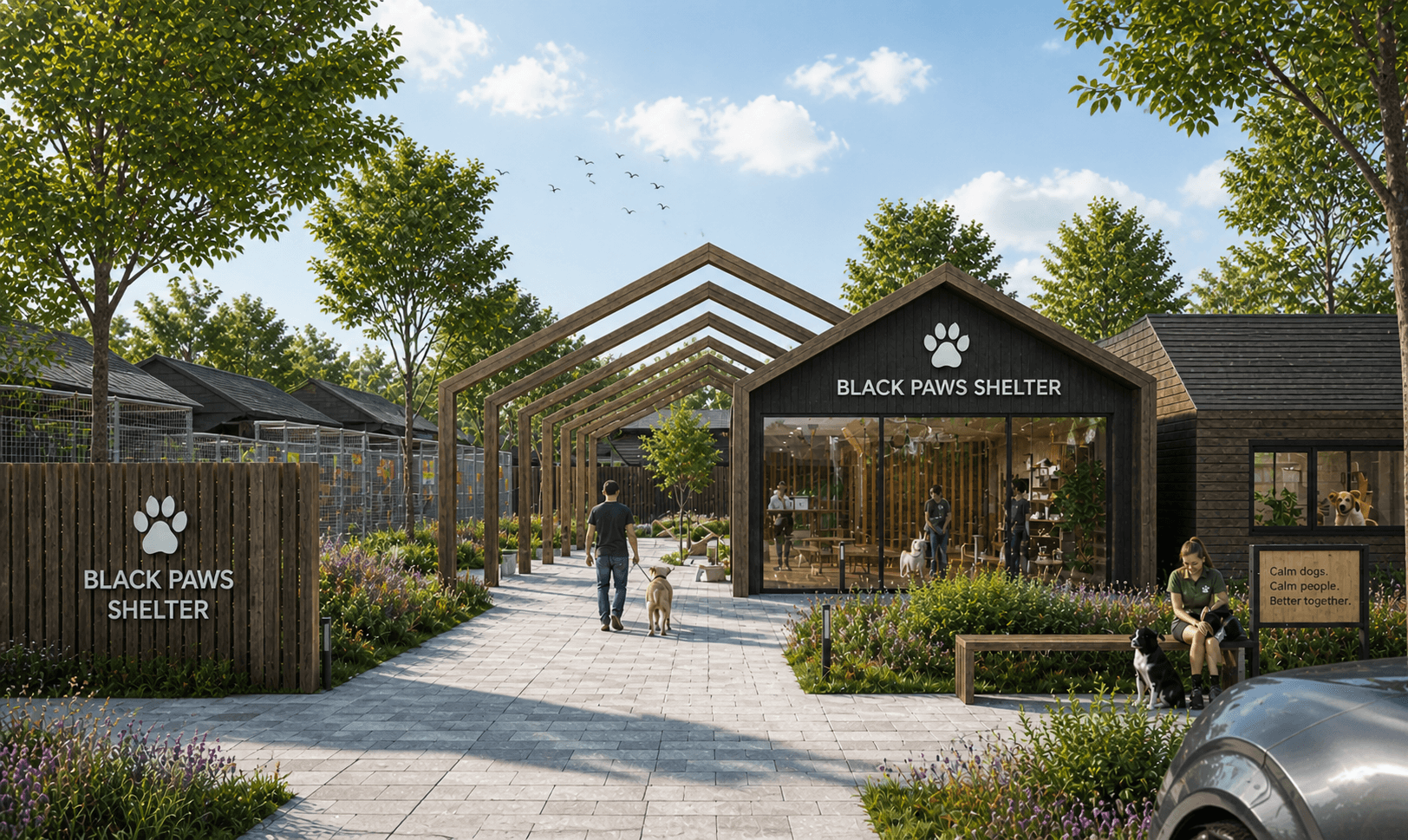
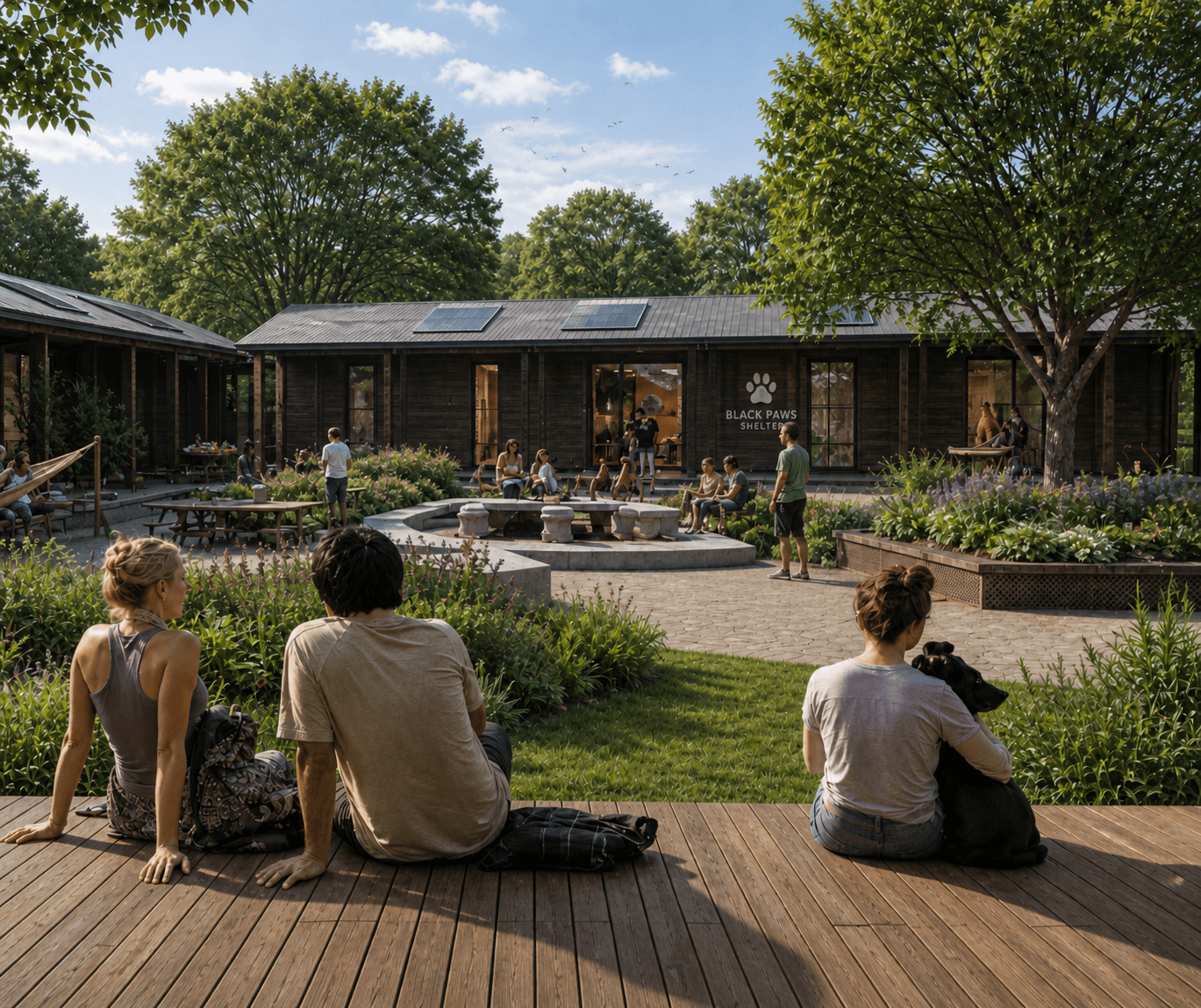
WHY THE WAY IT IS BUILT MATTERS
For a dog already under stress, entering a new and crowded environment can increase fear, hyperactivity, withdrawal, or adaptation difficulties. That is why, in modern care centers, space is no longer treated only as infrastructure, but as part of the rehabilitation process.
A better designed center can include quieter areas, better separation between dogs, less noise, adjustment spaces, outdoor access, natural light, exploration areas, and controlled interaction. These are not aesthetic details. They are elements that can help reduce stress and support a more realistic evaluation of the dog’s behavior.
For Black Paws, architecture does not mean only buildings. It means the way space can support healing, balance, and preparation for adoption.
WHAT WE BASE IT ON
The Black Paws vision is inspired by modern directions used in shelter medicine, shelter behavior, and programs focused on reducing fear, anxiety, and stress in animals living in shelters.
Modern shelter care guidelines emphasize welfare, the impact of stress on health and behavior, better organized housing, environmental enrichment, and spaces that allow more choice, more control, and less pressure for the animal.
In practice, this means that a well-designed center is not only “more beautiful,” but better suited for stabilization, behavioral rehabilitation, socialization, and preparation for adoption.
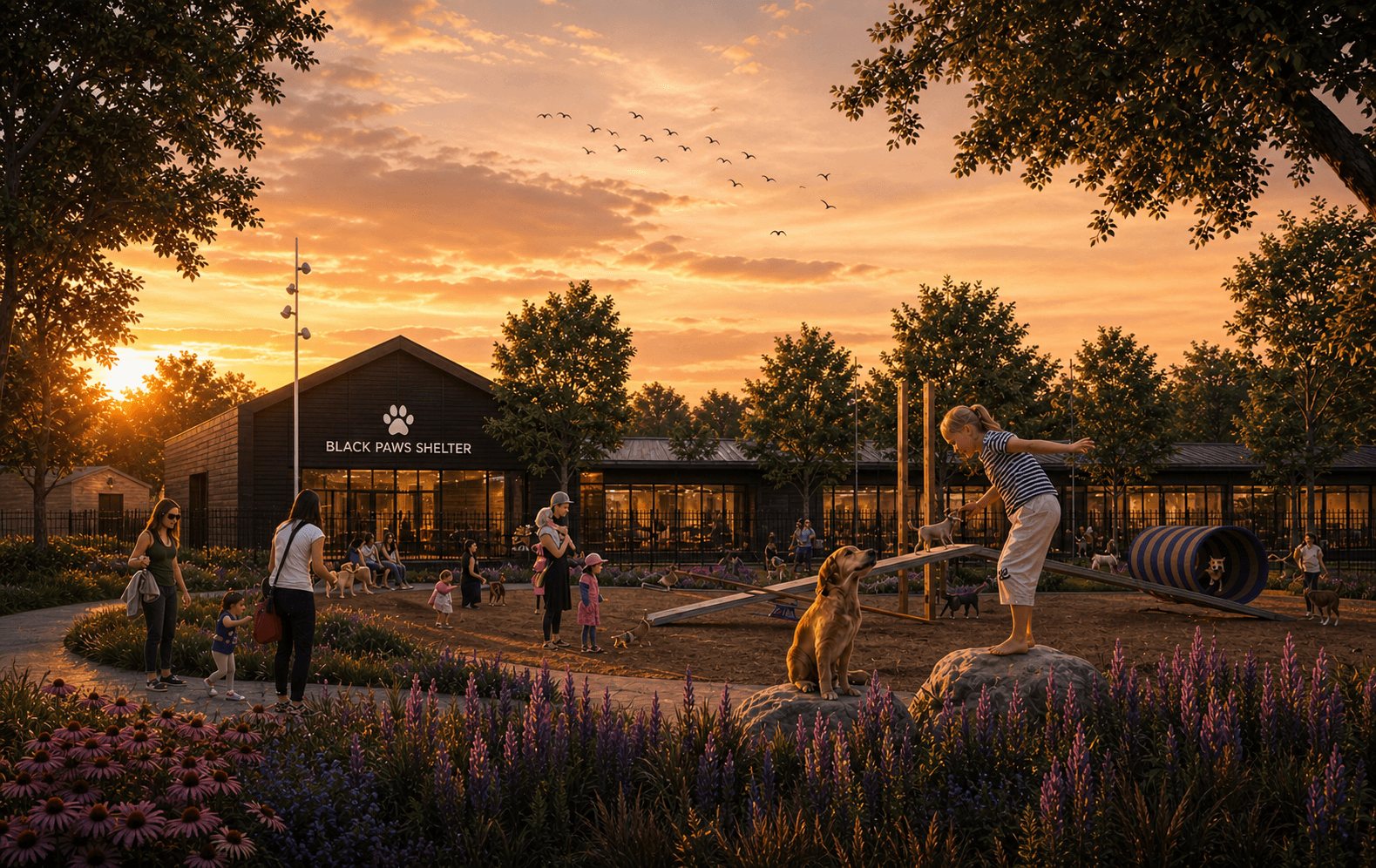
A calmer, more open, and better organized environment can help a dog adapt more easily and recover faster from a state of tension.
Black Paws is not focused only on housing dogs, but on evaluation, care, adjustment, proper socialization, and increasing the chances of a successful adoption.
A well-designed center also helps future adopters better understand the dog and get to know them in a context closer to real life.
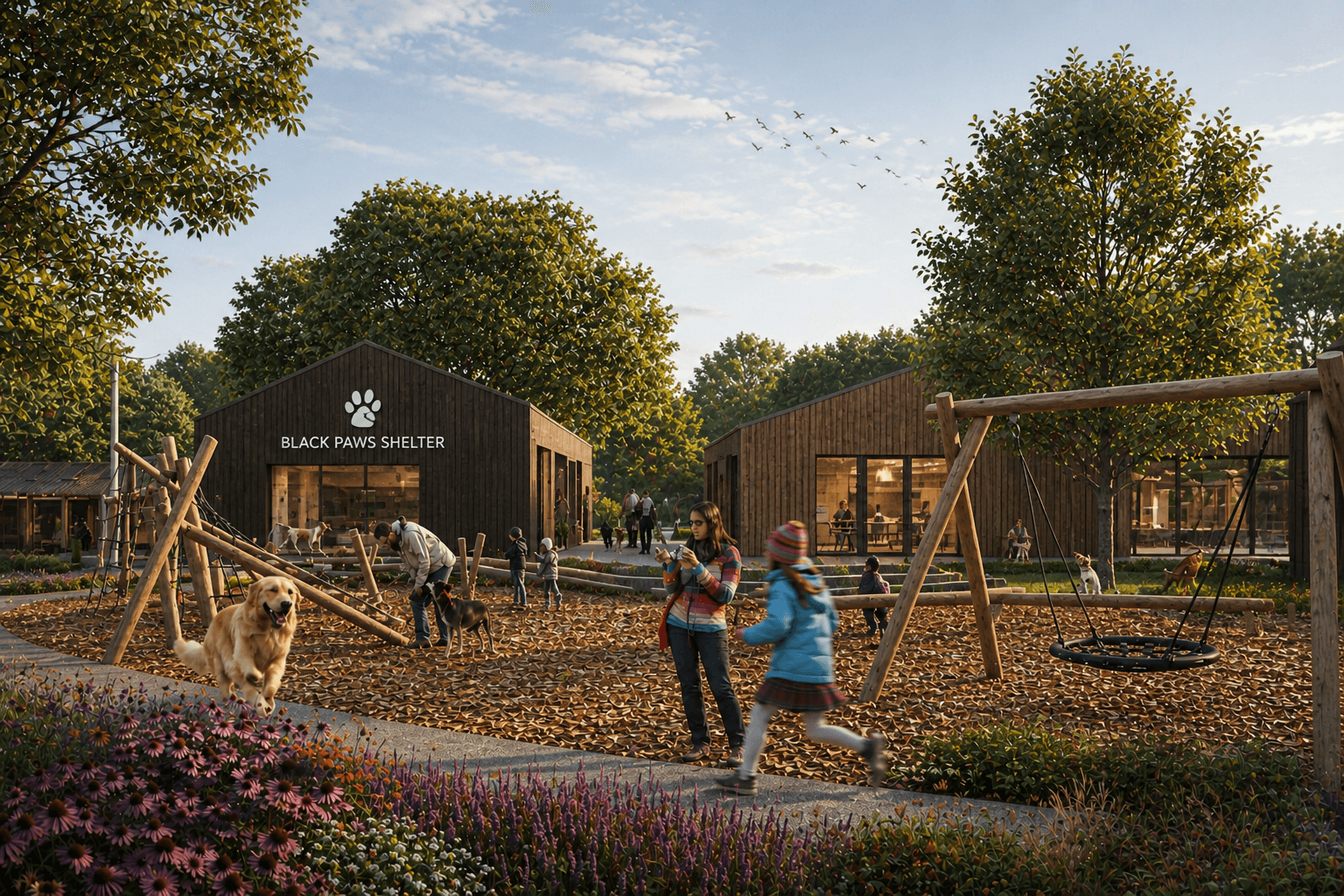
HOW IT TRANSLATES INTO PRACTICE
For Black Paws, this model means a center with green areas, paths, adjustment spaces, smaller and quieter pavilions, evaluation and care areas, places for controlled socialization, and spaces where future adopters can interact with dogs in a warmer and more natural setting.
We do not want only kennels and fences. We want a space that clearly separates important functions: rescue, evaluation, rehabilitation, rest, movement, interaction, and adoption.
The goal is not only minimal operation, but building a place that helps the dog regain stability and be better understood by people.
For us, a real center also means medical evaluation, adjustment, care, quarantine when needed, and a clear rehabilitation path.
The Black Paws model means yards, paths, natural light, movement areas, and quieter pavilions, not only kennels and fences.
We want spaces where dogs can be socialized in a controlled way and places where future adopters can meet them in a warmer and more natural setting.
WHY IT HELPS ADOPTION
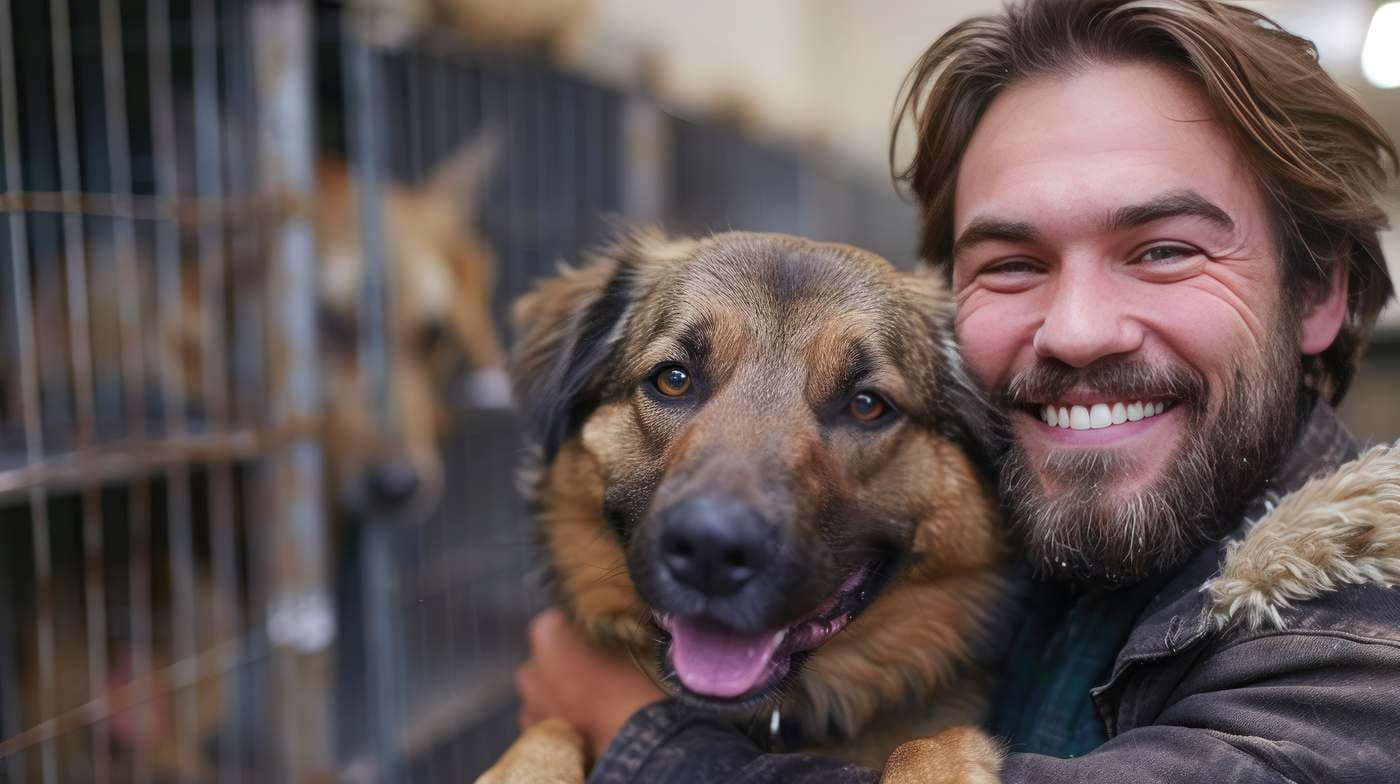
Many dogs do not only need to be rescued, but also to be properly understood. When they live in a highly stressful environment, their behavior can be harder to interpret. The dog may seem more agitated, more scared, more reactive, or more withdrawn than they would be in a more balanced setting.
A more carefully built center can offer a better context for observation, socialization, and preparation. This can help both the team and future adopters see more clearly who the dog is, what they need, and what type of family would suit them.
Black Paws wants to create better conditions not only for protection, but also for better matches between dogs and people.
DOCUMENTARY BASIS
The Black Paws vision is inspired by modern directions in shelter medicine, shelter behavior, and programs focused on reducing fear, anxiety, and stress in animal centers. Important references include the Association of Shelter Veterinarians guidelines, Fear Free principles for shelters, and examples of modern recovery and rehabilitation centers for dogs.
A modern direction that treats the environment, organization, stress, and welfare as important elements in the care of animals living in shelters.
Modern approaches focus on reducing emotional pressure on the animal and creating a clearer, calmer, and more predictable environment.
Modern examples of dog rehabilitation treat space, routine, and human interaction as active factors in recovery and preparation for adoption.
The first concrete objective is the land. Without it, we cannot build the legal and physical foundation from which the Black Paws project begins.
After the land, the next step is developing the center: spaces for evaluation, adjustment, rehabilitation, socialization, and responsible meetings between dogs and people.
The project will be built in stages, realistically and transparently, according to real needs and available resources.
Black Paws wants to build more than a shelter. We want a place where dogs can receive protection, balance, rehabilitation, and a real chance at a better life.